

Each year in the United States, up to one billion birds die after colliding with buildings. Most people never notice this issue, but on UMSL’s campus, I did. Recently, I found a small song sparrow (Melospiza melodia) lying motionless beside a large glass window at the UMSL Campus Recreation (REC). With no visible injuries, the cause was clear: a fatal window collision. I photographed it and reported the observation to iNaturalist, an online citizen-science platform.
Just a few days later, I noticed a dead robin (Turdus migratorius). It lay in front of the huge, reflective windows at the Science Learning Building (SLB). Seeing two window-related bird fatalities on the same campus within the same week immediately concerned me. To understand why this was happening, it is important to consider how birds perceive glass.
Birds do not perceive glass the way humans do. Transparent glass can appear invisible, while reflective windows mirror the surrounding environment: trees, sky or vegetation. To a bird, those reflections look like real habitat. A bird searching for shelter or food may attempt to fly directly toward what appears to be open air or greenery, only to collide with the glass. According to the American Bird Conservancy (ABC), scientists estimate that, across the United States, “between 365 million and 1 billion birds die every year after colliding with buildings,” with a median estimate of roughly “599 million deaths annually.” This makes building collisions one of the most significant human-caused threats to birds in North America.
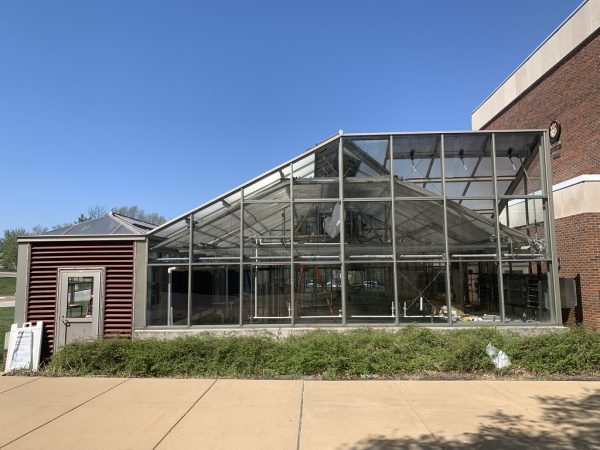
Many people assume skyscrapers are responsible for most of these deaths, but research shows the opposite. The majority of bird fatalities occur at low-rise buildings, structures similar in height to most campus buildings and homes. Smithsonian research cited by the ABC estimates that buildings one to three stories tall cause “about 253 million bird deaths per year,” while mid-rise buildings account for “approximately 339 million more.”
Urban environments make this problem worse. A city’s large concentration of glass, artificial lighting and large structures in relatively small areas results in copious negative environmental effects. Many birds migrate at night to avoid predators and take advantage of cooler temperatures, navigating partly by natural light from the moon and stars. Artificial lighting in cities distorts this natural guiding light, drawing birds off course or causing them to circle illuminated buildings until they collide with windows or other structures.
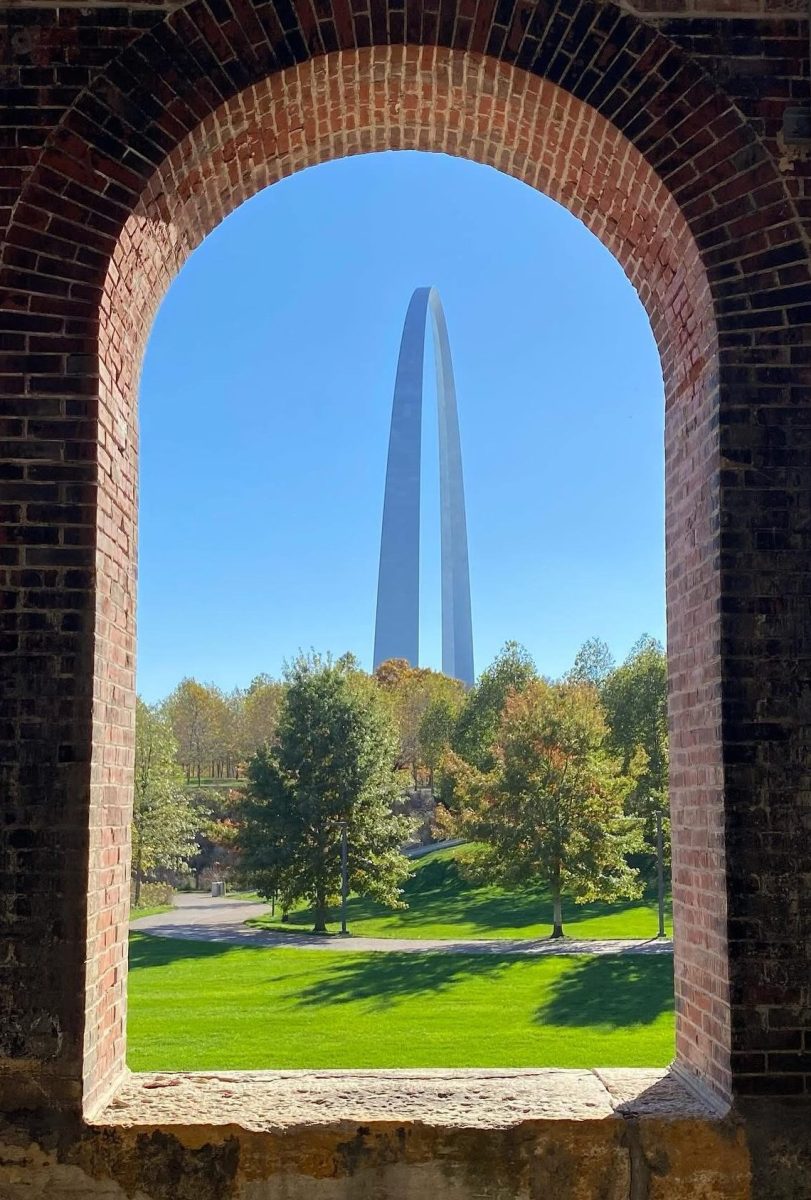
St. Louis sits directly in the path of one of North America’s major migration routes. The region lies within the Mississippi Flyway, a corridor used by millions of birds traveling between breeding and wintering grounds each spring and fall. Because of this combination of heavy migration and urban light pollution, researchers at the Cornell Lab of Ornithology ranked St. Louis as the fifth most dangerous U.S. city for birds during spring migration and sixth during fall migration.
Most window collisions, however, happen during the day.
During daylight hours, reflective glass mirrors nearby vegetation. When birds see trees, shrubs or gardens reflected in a window, they may interpret the reflection as real habitat and attempt to fly toward it. Transparent glass can create a similar problem if birds see plants on the other side of a window and try to reach them.
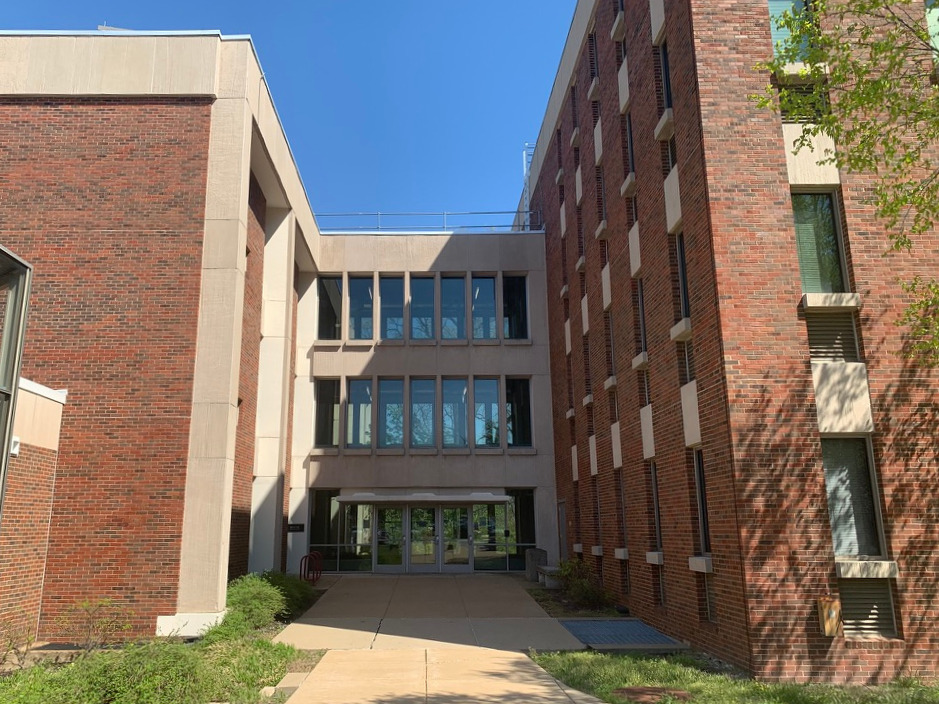
This is particularly relevant at both the REC and the SLB. Both buildings sit next to a small body of water and are surrounded by trees and native plantings. These features make both areas an attractive habitat for birds moving through the region, especially during migration. But, instead of landing in the vegetation, they encounter a transparent barrier.
The birds people find after collisions likely represent only a fraction of the total number that occur. Some birds die immediately after impact, but many fly away and later succumb to injuries such as concussions, internal bleeding or damaged wings. Others fall into landscaping or dense vegetation where they are difficult to see, and scavenger animals remove carcasses quickly. The ABC estimates that observers typically detect “only about 20 percent of birds killed by window collisions,” meaning the true number of deaths is much higher than what people see.
The encouraging part of this issue is that the solutions are relatively simple.
Bird-safe windows do not require replacing entire panes of glass. In most cases, applying visible patterns to the outside of windows is enough to prevent collisions. Dots, stripes, decals, tape or paint can signal to birds that the surface is solid and cannot be flown through. According to the National Audubon Society, the spacing between markers should be small, no more than two inches, so birds perceive the window as a barrier rather than open space.
These patterns have little impact on visibility for people inside the building. Some bird-safe treatments cover as little as one percent of the glass surface while still preventing collisions. Many local and national institutions already use these approaches. The Saint Louis Zoo, for example, incorporates bird-safe glass into its buildings by applying patterned treatments that allow birds to recognize the glass as a barrier. The Missouri Botanical Garden and the Audubon Center at Riverlands use these approaches as well. Applying similar treatments to the reflective windows at REC and SLB could significantly reduce the risk of bird collisions. It also aligns with UMSL’s broader environmental efforts, including native plantings, habitat restoration projects and ecological stewardship on campus.
Students and faculty can also help reduce bird collisions at home. Many window strikes occur at houses and apartment buildings simply because there are so many residential windows. Adding decals or other markers to the outside of windows can make them identifiable and far safer for birds.
The two birds I noticed may seem like small incidents, but they represent a larger problem that affects hundreds of millions of birds every year.
Fortunately, it is also a problem with straightforward solutions. With small changes to our windows on campus and at home, we can help make UMSL a safer place for the birds passing through the Mississippi Flyway.