






Over time, an increase in urbanization has led to a greater reliance on public transportation to mitigate the stress of traffic jams and accidents. An added benefit of taking public transportation is that it contributes less greenhouse gas emissions than the average automobile. According to the United Nations, shifting from driving a car to taking public transport saves 2.2 tons of carbon emissions per person per year.
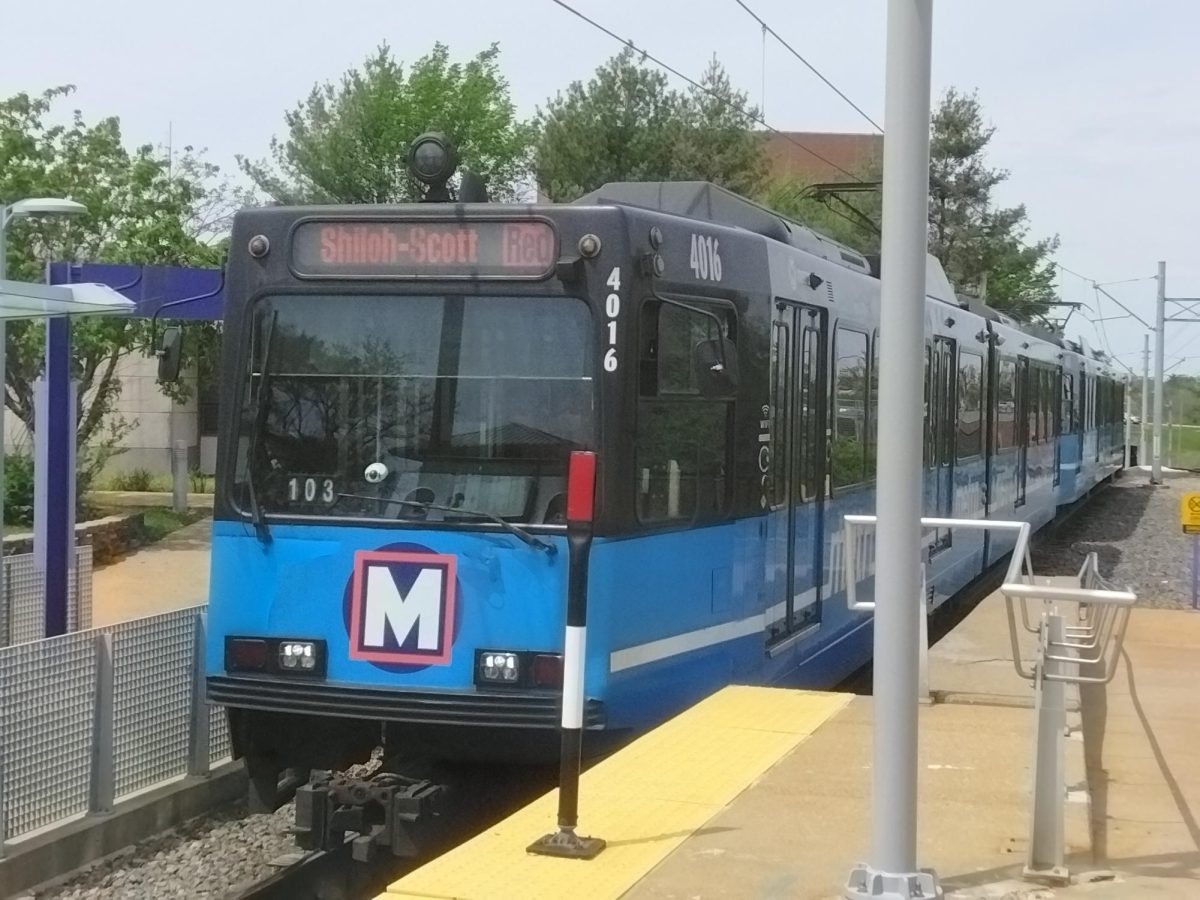
In St. Louis, public transportation options include the Metrobus and Metrolink. Buses run through most of the city limits with 8 different lines. The Metrolink provides limited access with only two lines, red and blue. The red line runs southeast from St. Louis International Airport through downtown and ends in Illinois at Shiloh-Scott. The blue line runs southwest from Shrewsberry-Lansdowne to I-44 through downtown and connects to the red line in Illinois.
At UMSL, students can purchase a Metro Pass for $25 a semester. This gives them access to unlimited rides on the MetroBus and Metrolink. MetroBus lines #4 and #47 both stop on the corner of Natural Bridge Road and University Drive. The Metrolink has stops at both the North and South Campuses.
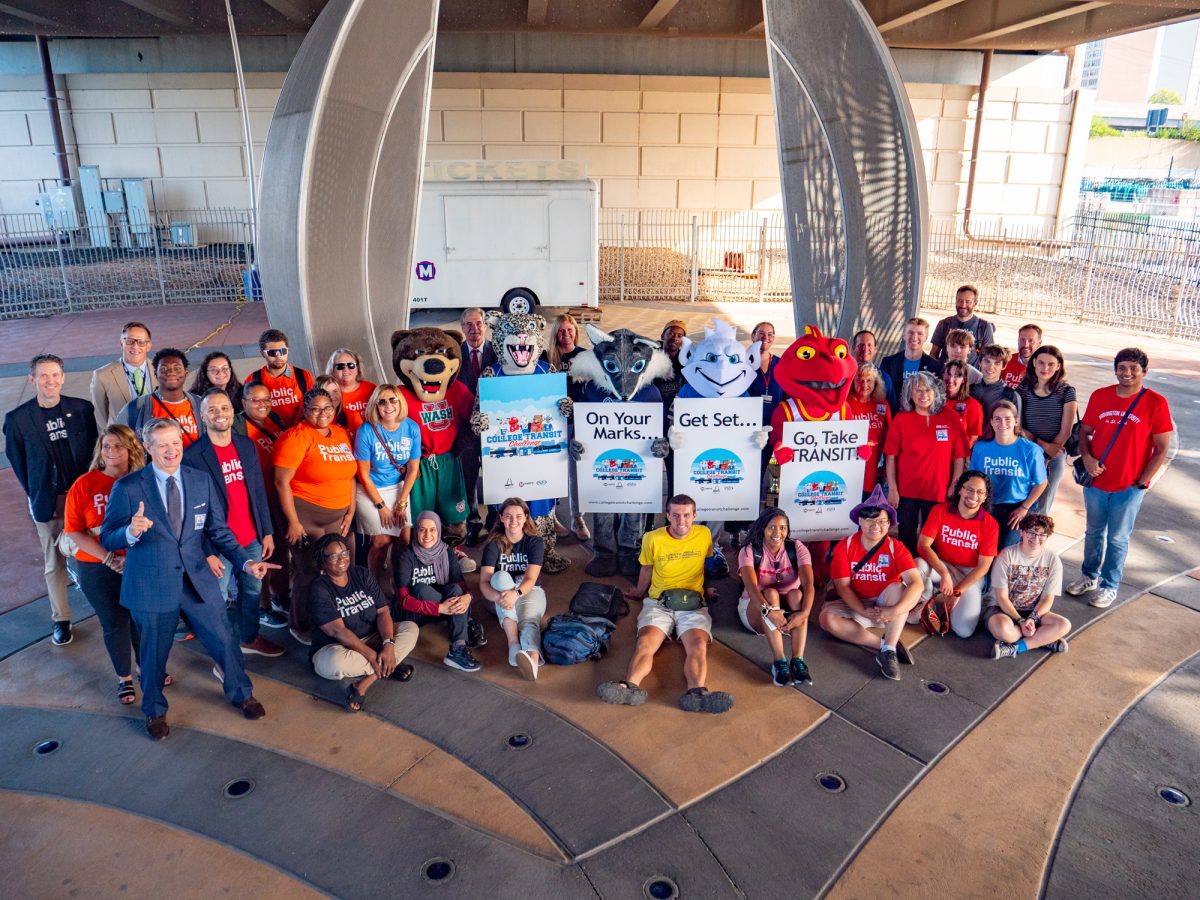
UMSL showed support for public transportation by hosting the College Transit Challenge in early October this Fall. A 24-hour challenge where schools across St. Louis: UMSL, Washington University, St. Louis Community College and Southwestern Illinois College, competed to see which school could record the most rides on the Metrolink/bus. The event kicked off with a mascot meetup at Grand Station, which included breakfast, swag and public transit t-shirts. This year, UMSL students recorded 73 trips, placing 2nd behind St. Louis University. This event promotes student use of public transportation and its affordability through the Metro U-pass program.

Despite a great turnout for College Transit Challenge, opinions on the practicality of public transit from UMSL students is mixed at best. A recent survey from The Current found that only 8% of respondents used public transportation to get to school or work, with a majority of75% using a conventional car. Of the 77% of respondents who stated they did not use public transportation and asked to select why, inconvenience was designated 31% of the time, personal reasons 23%, time constraints 15% and safety 15%. When asked if they saw public transportation in St. Louis as useful for their needs, 54% selected no, 23% yes and 23% partially.
These poll results highlight that many students do not consider the public transportation in St. Louis to be appropriate for their needs and find it inconvenient. When significant barriers, such as inconvenient lines and longer travel times exist, commuters would rather drive a personal vehicle. It’s not a surprise that St. Louis recently canceled the project to add an additional green line to the city’s transportation system. STLPR cited the proposed project at $1.1 billion, an out-of-reach cost for the city that does not qualify for federal funding.
Fewer commuters using public transportation in exchange for conventional cars will contribute to the pollution of greenhouse gases. Future discussion on climate change impacts of public transportation should focus on lowering barriers regarding the accessibility and time constraints of the Metrolink and bus lines.